PDF Download Hard Choices, by Hillary Rodham Clinton
A new encounter can be acquired by reading a publication Hard Choices, By Hillary Rodham Clinton Even that is this Hard Choices, By Hillary Rodham Clinton or other publication compilations. Our company offer this publication due to the fact that you could locate more things to encourage your ability and also understanding that will certainly make you much better in your life. It will be likewise helpful for individuals around you. We advise this soft data of guide below. To recognize how to obtain this book Hard Choices, By Hillary Rodham Clinton, find out more right here.
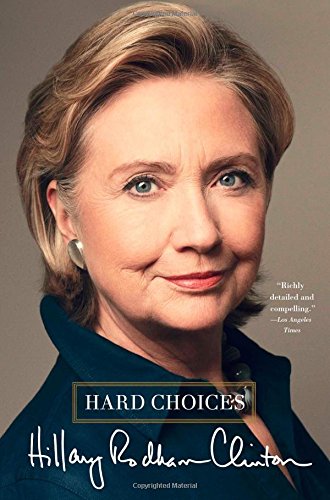
Hard Choices, by Hillary Rodham Clinton

PDF Download Hard Choices, by Hillary Rodham Clinton
Hard Choices, By Hillary Rodham Clinton As a matter of fact, book is actually a home window to the world. Also many individuals might not such as reviewing books; guides will still give the exact details about fact, fiction, encounter, adventure, politic, religious beliefs, and much more. We are here a website that offers collections of publications greater than guide establishment. Why? We give you great deals of varieties of link to get guide Hard Choices, By Hillary Rodham Clinton On is as you require this Hard Choices, By Hillary Rodham Clinton You can find this book conveniently here.
Maintain your way to be below as well as read this resource completed. You can appreciate searching guide Hard Choices, By Hillary Rodham Clinton that you actually refer to obtain. Below, getting the soft documents of the book Hard Choices, By Hillary Rodham Clinton can be done conveniently by downloading and install in the link resource that we provide below. Naturally, the Hard Choices, By Hillary Rodham Clinton will certainly be yours earlier. It's no should get ready for guide Hard Choices, By Hillary Rodham Clinton to receive some days later after buying. It's no should go outside under the warms at middle day to head to guide store.
This is a few of the benefits to take when being the member and get guide Hard Choices, By Hillary Rodham Clinton right here. Still ask exactly what's various of the other website? We give the hundreds titles that are created by advised authors as well as publishers, around the world. The link to purchase and download Hard Choices, By Hillary Rodham Clinton is likewise extremely simple. You could not find the challenging website that order to do even more. So, the means for you to get this Hard Choices, By Hillary Rodham Clinton will be so simple, won't you?
Based on the Hard Choices, By Hillary Rodham Clinton details that our company offer, you might not be so baffled to be right here as well as to be participant. Get now the soft data of this book Hard Choices, By Hillary Rodham Clinton and wait to be yours. You saving can lead you to stimulate the simplicity of you in reading this book Hard Choices, By Hillary Rodham Clinton Also this is kinds of soft file. You could really make better possibility to get this Hard Choices, By Hillary Rodham Clinton as the recommended book to check out.
2016 Democratic Nominee for President of the United States
Hillary Rodham Clinton’s inside look at the choices and challenges she has faced is “a subtle, finely calibrated work…with succinct and often shrewd appraisals of the complex web of political, economic, and historical forces in play around the world” (The New York Times).
In the aftermath of her 2008 presidential run, Hillary Rodham Clinton expected to return to the United States Senate. To her surprise, newly elected President Barack Obama asked her to serve in his administration as Secretary of State. “Hard Choices is a richly detailed and compelling chronicle of Clinton’s role in the foreign initiatives and crises that defined the first term of the Obama administration…it teems with small, entertaining details about her interactions with foreign leaders (Los Angeles Times).
Secretary Clinton and President Obama had to decide how to repair fractured alliances, wind down two wars, and address a global financial crisis. Along the way, they grappled with tough dilemmas, especially the decision to send Americans into harm’s way, from Afghanistan to Libya to the hunt for Osama bin Laden. By the end of her tenure, Secretary Clinton had gained a truly global perspective on the major trends reshaping today’s landscape.
In Hard Choices, “a rich and lively narrative” (Entertainment Weekly), Hillary Clinton offers her views on what it will take for the United States to compete and thrive. This “memoir is serious, sober, and substantive” (The New York Times Book Review).
- Sales Rank: #51337 in Books
- Brand: Simon Schuster
- Published on: 2015-04-28
- Released on: 2015-04-28
- Original language: English
- Number of items: 1
- Dimensions: 9.25" h x 1.40" w x 6.12" l, .0 pounds
- Binding: Paperback
- 560 pages
- Simon Schuster
Review
A subtle, finely calibrated work….Hard Choices is a statesmanlike document…with succinct and often shrewd appraisals of the complex web of political, economic and historical forces in play around the world, and the difficulties American leaders face in balancing strategic concerns with ‘core values.’ The tone is calm and measured, with occasional humorous asides, like describing an offer by Vladimir V. Putin, the Russian leader, to take Bill Clinton along on a polar-bear tagging expedition. (Michiko Kakutani The New York Times)
[A] clear and at times riveting account of Hillary Rodham Clinton’s four years as secretary of state….The book bolsters her reputation as a strong “representational” diplomat who carried the flag to 112 countries. But the meaty middle of Hard Choices does something more than chronicle the frequent-flier miles: It provides evidence that Clinton displayed good judgment as secretary of state and understood some important issues earlier than her boss, President Obama…..[O]nce Clinton gets rolling, she does what’s most valuable in this kind of memoir, which is to take readers inside her meetings — sketching portraits of the world leaders with whom she did business…..Perhaps the most revelatory passages in the book involve the secret diplomacy that led to the November 2013 interim nuclear agreement with Iran. (David Ignatius The Washington Post)
Hard Choices is a richly detailed and compelling chronicle of Clinton's role in the foreign initiatives and crises that defined the first term of the Obama administration — the pivot to Asia, the Afghanistan surge of 2009, the ‘reset’ with Russia, the Arab Spring, the ‘wicked problem’ of Syria — told from the point of view of a policy wonk… it's also mercifully free of the bromides that mar most campaign biographies. The book teems with small, entertaining details about her interactions with foreign leaders. (Los Angeles Times)
“To its credit, Clinton’s memoir is serious, sober and substantive….No fair-minded reader could finish this book and doubt Clinton’s essential command of the issues, whatever one might think of her solutions for them. She roams widely and delves into war and peace, terrorism and Russia, economic development and women’s rights. She knows the players and the history.” (Peter Baker New York Times Book Review)
“An amazing story….Above all, what comes through is Clinton's sheer persistence. This is how she does politics, by keeping going and totting up the small victories so that they outweigh the defeats.” (The Guardian)
“Enjoy Hard Choices for what it is at its best — a rich and lively narrative of Clinton's foreign policy successes, and failures.” (Entertainment Weekly)
“Undeniable depth.” (Financial Times)
“Blessed with an instant familiarity.” (The Independent)
“Clinton’s voice and world view is authentic…and this is gripping.” (Evening Standard)
“Clinton goes into deep detail about her work in Asia, Iraq and Afghanistan, Latin America, and other hot spots around the globe. She details her vision for U.S. foreign policy and the role of diplomacy. Along the way, she introduces readers to a who’s who of world leaders and gives insight into the way they think and do business.” (Booklist)
About the Author
Hillary Rodham Clinton became the first woman in US history to become the presidential nominee of a major political party in 2016. She served as the 67th Secretary of State—from January 21, 2009, until February 1, 2013—after nearly four decades in public service advocating on behalf of children and families as an attorney, First Lady, and Senator. She is a wife, mother, and grandmother.
Excerpt. © Reprinted by permission. All rights reserved.
17
Benghazi: Under Attack
On September 11, 2012, Ambassador Chris Stevens and Information Management Officer Sean Smith were killed in a terrorist attack on our diplomatic compound in Benghazi, Libya. Two CIA officers, Glen Doherty and Tyrone Woods, were killed hours later during an attack on the Agency’s nearby compound.
Sean Smith had joined the State Department after six years in the Air Force and served for a decade at our embassies and consulates in Pretoria, Baghdad, Montreal, and The Hague.
Tyrone Woods was known to his friends in the Navy SEALs and later the CIA as “Rone.” He served multiple tours in Iraq and Afghanistan. In addition to being an experienced combat veteran, he also earned distinction as a registered nurse and certified paramedic. He and his wife, Dorothy, had three sons, including one born just a few months before he died.
Glen Doherty, who went by “Bub,” was a former SEAL as well and an experienced paramedic. He too had deployed to some of the most dangerous places on earth, including Iraq and Afghanistan, always putting his life on the line to safeguard other Americans. Both Tyrone and Glen had committed their skills and experience to protecting CIA personnel in Libya.
Ambassador Chris Stevens, the only one of the four I had the privilege of knowing personally, was a talented diplomat and an engaging and extraordinarily warm human being. When I asked him in the spring of 2011 to undertake the dangerous mission to make contact with the Libyan rebel leadership in Benghazi during the revolution, and later to return to Libya as Ambassador after the fall of Qaddafi, he quickly accepted. Chris understood the risks and recognized how challenging it would be to help pull together a shattered country, but he knew that America had vital national security interests at stake. His long experience in the region and talent for delicate diplomacy made him a natural choice.
Losing these fearless public servants in the line of duty was a crushing blow. As Secretary I was the one ultimately responsible for my people’s safety, and I never felt that responsibility more deeply than I did that day.
Sending those who serve our nation into harm’s way is one of the hardest choices our country and leaders ever have to make. Far and away my greatest regret from those years is that not all of them returned home safely. I often think about the families who lost loved ones serving our country. The gravity of the mission and the gratitude of our nation may provide some solace, but in the end there is nothing any of us can say or do to fill the holes left behind.
The truest way to honor them is to improve our ability to protect those who carry on their work and prevent future losses.
From my first day leading the State Department, I was aware that terrorists could strike any of our more than 270 diplomatic posts around the world. It had happened too many times before, and those hell-bent on attacking America would never stop trying. In 1979, fifty-two American diplomats were taken hostage in Iran and held captive for 444 days. The Hezbollah attacks on our embassy and Marine barracks in Beirut in 1983 killed 258 Americans and more than a hundred others. In 1998, al Qaeda bombed our embassies in Kenya and Tanzania, killing more than two hundred people, including twelve Americans. I vividly remember standing next to Bill at Andrews Air Force Base when the remains of those who had fallen returned home.
All told, terrorists have killed sixty-six American diplomatic personnel since the 1970s and more than a hundred contractors and locally employed staff. Four U.S. Ambassadors were murdered in terrorist attacks between 1973 and 1979 alone. Since 2001 there have been more than one hundred assaults on U.S. diplomatic facilities around the world and nearly two dozen direct attacks on diplomatic personnel. In 2004, gunmen killed nine people, including five locally employed staff in an attack on our consulate in Jeddah, Saudi Arabia. In May 2009, a roadside bomb in Iraq killed Terry Barnich, the Deputy Director of our Transition Assistance Team. In March 2010, Lesley Enriquez, a pregnant twenty-five-year-old consular officer in Juarez, Mexico, was shot to death, along with her husband. In August 2012, USAID officer Ragaei Said Abdelfattah was killed by a suicide bomber in Afghanistan. As of 2014, 244 of America’s diplomats have fallen in our nation’s history while serving overseas.
Diplomacy, by its very nature, must often be practiced in dangerous places where America’s national security hangs in the balance. We have to weigh the imperatives of our national security against the sacrifices required to safeguard it. As Secretary of State I was responsible for nearly seventy thousand employees, and I deeply admired those who volunteered to accept the risks that come with carrying our flag where it is needed most. Every day as they walk into work the men and women of the State Department pass the names of those 244 fallen diplomats inscribed in marble in the lobby of the Harry S Truman Building. It’s a constant reminder of the risks that come with representing the United States around the world. I was heartened—though not surprised—to learn from the Department that after major attacks against the United States, applications to the Foreign Service went up. People want to serve our country, even when it means being in harm’s way. Nothing speaks more to the character and dedication of those who represent our country around the world.
The events of September 2012, and the choices made in the days and weeks before and since, throw into sharp relief some of the toughest dilemmas of American foreign policy—and the heartbreaking human stakes of every decision we make. Our diplomats must balance the necessity of engaging in difficult and dangerous settings with the need to stay safe and secure. As a country, we have to do more to protect them, without preventing them from doing their important jobs. We need to stay open to the world in a time when any provocation can spark anti-American riots across the globe and far-flung terrorist groups continue to plot new attacks. Ultimately these challenges boil down to this: Are we willing to shoulder the burdens of American leadership in a perilous age?
Part of the answer came from the independent investigation into the Benghazi attacks, which noted, “The total elimination of risk is a non-starter for U.S. diplomacy, given the need for the U.S. government to be present in places where stability and security are often most profoundly lacking and host government support is sometimes minimal to non-existent.”
While we can and must work to reduce the danger, the only way to eliminate risk entirely is to retreat entirely and to accept the consequences of the void we leave behind. When America is absent, extremism takes root, our interests suffer, and our security at home is threatened. There are some who believe that is the better choice; I am not one of them. Retreat is not the answer; it won’t make the world a safer place, and it’s just not in our country’s DNA. When faced with setbacks and tragedies, Americans have always worked harder and smarter. We strive to learn from our mistakes and avoid repeating them. And we do not shrink from the challenges ahead. That is what we must continue to do.
The events of that September occurred in what is often called the “fog of war,” with information hard to come by, and conflicting or incomplete reports making it difficult to tell what was actually happening on the ground, especially from thousands of miles away in Washington. To a frustrating degree, that fog persisted so long, in part because of continuing turmoil in Libya. And despite the best efforts of officials from across our government—including the White House, the State Department, the military, the intelligence community, the FBI, an independent Accountability Review Board, and eight Congressional committees—there will never be perfect clarity on everything that happened. It is unlikely that there will ever be anything close to full agreement on exactly what happened that night, how it happened, or why it happened. But that should not be confused with a lack of effort to discover the truth or to share it with the American people. I am grateful to the many dedicated professionals who have worked tirelessly to answer all the questions they could to the best of their abilities.
What follows is based on a combination of my own personal experience and information learned over the following days, weeks, and months thanks to several exhaustive investigations, especially the work of the independent review board charged with determining the facts and pulling no punches. While there has been a regrettable amount of misinformation, speculation, and flat-out deceit by some in politics and the media, more than a year later in-depth reporting from a number of reputable sources continues to expand our understanding of these events.
While the morning of September 11, 2012, began like many others, there are few dates as meaningful to our country. On every 9/11 since 2001, I think back to that terrible day. I was not even a year into representing New York in the Senate when it was devastated by the attacks on the Twin Towers. That day, which started with hundreds fleeing down the stairs of the Capitol Building and ended with hundreds of members standing on those very same steps singing “God Bless America” in a moving display of unity, shaped my unrelenting focus on helping New York recover and securing it against future attacks. With those memories flooding back, I left home for the State Department.
After the short drive to the office, the first order of business, as always, was to receive the daily briefing on intelligence and national security developments, including the latest reports of terrorist threats around the world. This briefing is given every day to senior officials across our government. It is prepared by a team of dedicated career intelligence analysts who work overnight before fanning out across Washington before dawn every morning to hand-deliver and orally present their reports.
The past few months had been a tumultuous time across the Middle East and North Africa. The civil war in Syria was escalating, sending refugees streaming into Jordan and Turkey. In Egypt the ascension of the Muslim Brotherhood and tensions with the military raised questions about the future of the Arab Spring. Al Qaeda’s affiliates in North Africa, Iraq, and the Arabian Peninsula continued to threaten regional security.
On September 8, an inflammatory fourteen-minute video that purported to be a trailer for a full-length movie called Innocence of Muslims was aired on an Egyptian satellite TV network widely available across the Middle East. According to several press accounts, the film depicts a “buffoonish caricature of the prophet Muhammad,” using “slurs about him that are often repeated by Islamophobes,” even comparing him to a donkey. One press report claims that in the film the Prophet is “accused of homosexuality and child molestation.” Many Egyptian viewers were outraged, and, fueled by the internet, that rage quickly spread across the Middle East and North Africa. Although the U.S. government had absolutely nothing to do with the video, many blamed America.
The anniversary of 9/11 added another potentially combustible element and, like every year, prompted our intelligence and security officials to proceed with extra caution. Yet the intelligence community, as they’ve testified since, relayed no actionable intelligence about specific threats against any U.S. diplomatic post across the Middle East and North Africa.
Later that morning I walked from my office down the hall to the Treaty Room to officially swear in Gene Cretz, who had recently returned from service in Libya, as our new Ambassador to Ghana. Around the same time, half a world away in Cairo, young men began gathering in the street outside the U.S. Embassy as part of a protest organized by hardline Islamist leaders against the insulting video. The crowd swelled to more than two thousand people shouting anti-American slogans and waving black jihadi banners. Some demonstrators climbed the walls and ripped apart a large American flag, replacing it with a black flag. Egyptian riot police eventually arrived, but the protest continued. Thankfully none of our people were injured in the melee. Journalists and others in the crowd using social media recorded angry comments about the video. One young man said, “This is a very simple reaction to harming our prophet.” Another insisted, “This movie must be banned immediately and an apology should be made.”
This was not the first time that provocateurs had used offensive material to whip up popular outrage across the Muslim world, often with deadly results. In 2010, a Florida pastor named Terry Jones announced plans to burn the Quran, Islam’s holy text, on the ninth anniversary of 9/11. His threats were picked up and amplified by extremists setting off widespread protests. At that time I was surprised that one firebrand in Gainesville, Florida, with a tiny church could cause so much trouble. But the consequences of his threat were all too real. Secretary of Defense Bob Gates personally called Jones and told him that his actions endangered the lives of American and Coalition soldiers and civilians in Iraq and Afghanistan. Jones agreed to hold off, and the anniversary came and went. Then in March 2011, he went back on his word and burned a Quran. Bob’s warnings proved tragically prescient, as an angry mob in Afghanistan set fire to a UN office and killed seven people. Deadly protests erupted again in February 2012 after U.S. troops inadvertently burned religious texts at Bagram Air Force Base in Afghanistan. Four Americans died. Now Jones was helping promote this new video insulting the Prophet Muhammad and there was a real danger of history repeating itself.
With an eye on the developing situation in Cairo, I headed to the White House to meet with Defense Secretary Leon Panetta and National Security Advisor Tom Donilon. When I returned to my office, I huddled with senior State Department leaders throughout the afternoon, closely monitoring reports from our embassy. Our Ambassador to Egypt, Anne Patterson, happened to be back in Washington for consultations, and she stayed in constant contact with her Deputy Chief of Mission and worked the phones to pressure the Egyptian authorities to get control of the situation. We were all relieved when further violence was avoided.
We learned later that as events unfolded in Cairo, in neighboring Libya Ambassador Chris Stevens was visiting the country’s second largest city, Benghazi.
A lot had happened in Libya since my visit to Tripoli in October 2011. Two days after I left Libya, Colonel Muammar Qaddafi was captured and killed. The first Parliamentary elections were held in early July 2012, and the transitional government handed over power to a new General National Congress in August in a ceremony that Chris cited as the highlight of his time in the country. Chris and his team worked closely with Libya’s new leaders as they grappled with the significant challenges of setting up a democratic government and providing security and services in a country hollowed out by decades of tyranny. Militia fighters, like those who had greeted me at the airport and guarded my motorcade a year earlier, would have to be brought under the authority of the central government. There were loose weapons to collect, elections to organize, and democratic institutions and processes to establish. Law and order remained a real problem.
In February 2012, I sent Deputy Secretary Tom Nides to Tripoli and then welcomed interim Prime Minister Abdurrahim El-Keib to Washington in March. We offered to help the government secure its borders, disarm and demobilize the militias, and reintegrate former fighters into the security services or civilian life. In July Deputy Secretary Bill Burns followed up with another visit. I stayed in touch with leaders in the Libyan government by phone, including an August call with Libyan General National Congress President Mohammed Magariaf, and received regular updates from our teams in Washington and Tripoli on efforts across the U.S. government to assist the new Libyan government. There was preliminary progress on demobilization, demilitarization, and reintegration, as well as efforts to secure and disable loose weapons throughout Libya, but so much remained to be done. Specialists from the Defense Department and State Department border security experts worked closely with their Libyan counterparts. On September 4, 2012, we designated Libya eligible for the Global Security Contingency Fund, a joint Defense and State initiative pooling resources and expertise to address the wide variety of challenges the Libyan government faced.
Chris was at the center of all this activity, and he knew better than anyone how many challenges remained for Libya. On Monday, September 10, he left the U.S. Embassy in Tripoli and flew four hundred miles east to Benghazi, where we maintained a temporary diplomatic post with rotating staff. Benghazi is a port city on the Mediterranean Sea with a population of more than 1 million people, mostly Sunni Muslims, and large African and Egyptian minorities. Its varied architecture, a mix of age-weathered buildings and construction projects abandoned half-completed, reflects a history of conquest and conflict by competing Arab, Ottoman, and Italian rulers, as well as the quixotic ambitions and long, slow decay of the Qaddafi regime. Benghazi had been a hotbed of dissidents, and both the 1969 revolution that brought Qaddafi to power and the 2011 revolution that unseated him began in the city. Chris knew Benghazi well from his time as our representative to the rebel Transitional National Council, which was based there during the 2011 uprising, and he was widely liked and admired.
U.S. Ambassadors are not required to consult or seek approval from Washington when traveling within their countries, and rarely do. Like all Chiefs of Mission, Chris made decisions about his movements based on the security assessments of his team on the ground, as well as his own judgment. After all, no one had more knowledge or experience in Libya than he did. He was well aware of the lawlessness in Benghazi, including a series of incidents earlier in the year against Western interests. Yet he also understood Benghazi’s strategic importance in Libya and decided that the value of a visit outweighed the risks. He brought along two security officers, so there were five Diplomatic Security (DS) agents at the compound in Benghazi at the time of the attack. With State Department officer Sean Smith, there was a total of seven Americans on-site.
We would subsequently learn that upon arriving in Benghazi, Chris received a briefing from local CIA personnel, who were based at a second, larger compound less than a mile away. Its existence and mission were closely guarded secrets, but there was an understanding between security officials in both agencies that in an emergency, a CIA rapid-response team would deploy to the State Department compound to provide extra protection. Chris’s first day ended with dinner with members of the city council at a hotel in town.
On Tuesday, the eleventh anniversary of 9/11, Chris held all of his meetings within the State compound. In the late afternoon, after the mob had gathered at our embassy in Cairo, he met with a Turkish diplomat. When Chris walked him out afterward, there were no signs of anything out of the ordinary. At around 9 p.m. both Chris and Sean retired for the night.
About forty minutes later, without warning, dozens of armed men appeared at the gates of the compound, overwhelmed the local Libyan guards, and streamed inside. They set fires as they went.
Alec, the DS agent manning the compound’s tactical operations center, saw the mob on closed-circuit television, heard the sounds of gunfire and an explosion, and sprang into action. He activated the compound’s alert system, established contact with U.S. security officials at the embassy in Tripoli, and, as had been practiced, alerted the well-armed CIA team stationed nearby to request their immediate assistance.
The other four DS agents reacted exactly as they were trained to do. Scott, the Agent in Charge, moved Chris and Sean, two men he would nearly lose his own life protecting that night, to a fortified safe haven within the compound’s main house. The remaining three agents scrambled to collect their heavier weapons and tactical gear, but quickly found themselves pinned down in two separate buildings elsewhere on the compound.
Scott kept watch from inside the safe haven, his M4 rifle at the ready, while Chris borrowed his phone to make a series of calls to local contacts and to his Deputy, Greg Hicks, at the embassy in Tripoli. They heard men rampaging through the rest of the house and banging on the steel gate of the safe haven. Then, unexpectedly, the attackers withdrew. They doused the building with diesel fuel and set it on fire. The diesel gave off a thick, black, acrid smoke that quickly filled the air. Soon Chris, Sean, and Scott were struggling to see and breathe.
Their only hope was to make it to the roof. There was an emergency exit that offered a chance of escape. Crawling on his hands and knees, Scott led the way. His eyes and throat burning, he managed to reach the exit grille and throw it open. But when he crawled through it and turned around, Chris and Sean were not right behind him as they had been only moments before. They were lost in the blinding smoke. To this day I am haunted by the thought of what those excruciating minutes in the burning building must have felt like.
Scott searched desperately, reentering the building multiple times, calling out their names without success. Finally, near collapse, he climbed a ladder to the roof. The other DS agents heard his hoarse voice crackle through the radio with a chilling message: the Ambassador and Sean were missing.
When the crowd of armed attackers, having ransacked most of the compound, started to recede, the three agents who had been pinned down were finally able to reach the main building. They provided first aid to Scott, who was suffering from severe smoke inhalation and other wounds, and then they retraced his steps back through the window into the safe haven. By now it was impossible to see anything inside because of the smoke, but they refused to give up the search, making numerous attempts to find Chris and Sean, crawling on the floor and feeling their way around. When one of them attempted to open the front door of the building, part of the ceiling collapsed.
From the moment the CIA station learned their fellow Americans were under attack, a response team prepared to launch a rescue. They could hear explosions in the distance and quickly assembled their weapons and prepared to deploy. Two vehicles of armed officers left the CIA post for the diplomatic compound about twenty minutes after the attack had begun. Until late October, when the Agency publicly acknowledged its presence in Benghazi, the existence of the CIA station was a secret, so in the immediate aftermath of the attack these officers received no public recognition. But all of us at the State Department were immensely grateful for the way our CIA colleagues responded that night.
When the CIA team arrived, they split up to secure the compound and joined the DS agents in the search of the burning building. Soon they made a terrible discovery. Sean was dead, apparently from smoke inhalation. His body was carefully carried out of the ruined building. There was still no sign of Chris.
My first word of the attack came around that time, when Steve Mull rushed down the hall to my office from the State Department’s Operations Center. Steve, a thirty-year veteran of the Foreign Service, widely respected for his diplomatic and logistical skills, was in his final weeks as the Department’s Executive Secretary, preparing to take up his next post as Ambassador to Poland. Among other responsibilities, the “Exec Sec” is tasked with managing the flow of information between Washington and the Department’s hundreds of posts around the world. Troubling reports from across the Middle East had filled this day. But even against that backdrop, as soon as I saw the look in Steve’s eyes, I could tell something was terribly wrong. All he knew at that point was that our Benghazi compound was under attack.
My thoughts immediately went to Chris. I had personally asked him to take on the assignment of Ambassador to Libya, and I shuddered to think that he and our other people on the ground were now in grave danger.
I picked up the secure phone on my desk and hit the button that instantly connected me to the White House, to National Security Advisor Tom Donilon. President Obama learned of the attack during an Oval Office meeting with Secretary of Defense Leon Panetta and Chairman of the Joint Chiefs Marty Dempsey, a no-nonsense straight shooter. After hearing the news the President gave the order to do whatever was necessary to support our people in Libya. It was imperative that all possible resources be mobilized immediately. The CIA outpost was already responding, but he wanted any assets that could be deployed pressed into service. When Americans are under fire, that is not an order the Commander in Chief has to give twice. Our military does everything humanly possible to save American lives—and would do more if they could. That anyone has ever suggested otherwise is something I will never understand.
Learning of the attack was a punch in the gut, but in the middle of an ongoing crisis, I didn’t have time to process the flood of emotions—there was too much to do. I directed our State operations team, led by Under Secretary Pat Kennedy, to work with the embassy in Tripoli to get our people to safety and to break down the doors of the Libyan government if necessary to demand more support. I also called CIA Director David Petraeus since the Agency maintained the nearby post with a heavy security force. We also had to get ready for the possibility of other assaults elsewhere. Our embassy in Cairo had already been targeted. Now Benghazi was under attack. Where would be next? Pat was a forty-year veteran of the Foreign Service, having served eight Presidents from both parties. Some mistook his mild manner and penchant for cardigans and sweater vests as a sign of softness, but Pat was as tough as they came. He was calm amid the commotion and assured me that everything that could be done was being done. He was no stranger to fluid events, having served during some of the worst attacks on State Department personnel and property, and as a young Foreign Service officer had a small role supporting the families of the six American diplomats who ultimately escaped Iran after our embassy there was overrun in 1979 (dramatized in the film Argo).
In Tripoli a plane was quickly chartered, and a group of seven military and intelligence personnel began prepping for rapid deployment to Benghazi. Additional options were limited. The Pentagon had Special Operations forces standing by in Fort Bragg, North Carolina, but they would take several hours to muster and were more than five thousand miles away. Our civilian leaders and uniformed commanders, including the Chairman of the Joint Chiefs of Staff and others from his team, have repeatedly testified under oath both in public and in closed classified hearings that assets were immediately mobilized, but none could quickly reach Libya. Critics have questioned why the world’s greatest military force could not get to Benghazi in time to defend our people. Part of the answer is that, despite having established United States Africa Command in 2008, there just wasn’t much U.S. military infrastructure in place in Africa. Unlike in Europe and Asia, the U.S. military footprint in Africa is nearly nonexistent. Additionally our military is not deployed globally with the mission of maintaining forces at the ready to defend diplomatic posts. Tethering our forces to more than 270 embassies and consulates worldwide is a mission our military leaders have testified the Pentagon is simply not equipped to handle. Those are the facts, though not everyone accepts them and some insist on repeatedly questioning the actions of our military. For instance, weeks after the attack there was a sensational report that an American AC-130 gunship was sent to Benghazi but later waved off. The Pentagon undertook a comprehensive look into the accusation. Not only was there no gunship nearby, but there was no gunship on or near the entire continent of Africa. The closest gunship was over a thousand miles away in Afghanistan. This is but one of the false accusations made by those all too willing to misinform.
Another asset that some critics assert would have made a difference was called FEST. After the embassy bombings in East Africa in 1998, an interagency Foreign Emergency Support Team was deployed; it was trained and equipped to help restore secure communications, respond to biohazards, and provide other support to crippled diplomatic facilities. But this team was not an armed reaction force capable of intervening in an active fight, and they too were based thousands of miles away, in Washington.
Many Americans and even members of Congress were surprised to learn that there were no U.S. Marines assigned to our Benghazi compound. In fact Marines are assigned to only a little over half of all our diplomatic posts around the world, where their primary mission is the protection and, if necessary, the destruction of classified materials and equipment. So while Marines were immediately deployed after the attack to our embassy in Tripoli, because there was no classified processing at the diplomatic compound in Benghazi, there were no Marines posted there.
There was also no live video feed out of the compound in Benghazi for anyone back in Washington to monitor. Some larger embassies around the world do have this capability, but Benghazi was a temporary facility without sufficient broadband access. It did have closed-circuit cameras and a video recording system on-site, not unlike a home DVR, but U.S. security officials would not gain access to this footage until weeks later, when Libyan authorities recovered the equipment and turned it over to American officials. So officials in the Diplomatic Security Command Center in Virginia trying to monitor the rush of events in real time had to rely on a single open phone line, listening to their colleagues in Tripoli and Benghazi. They could hear some of what was happening, but the picture was agonizingly incomplete.
To help fill this gap, one asset that could be quickly brought to bear was an unarmed and unmanned surveillance drone that was already flying a mission elsewhere over Libya. The drone was redirected to Benghazi and arrived on station roughly ninety minutes after the attack began, providing U.S. security and intelligence officials another way to monitor what was happening on the ground.
Around that time the Operations Center reported that gunfire at the compound had subsided and our security forces were attempting to locate missing personnel. That was a chilling phrase. Much of the mob had withdrawn, but for how long? Fighters and looters were still milling about nearby. The team decided that staying any longer would put more American lives at risk. Despite the ongoing efforts to find Chris, who was still missing in the burning main building, their only choice was to evacuate back to the CIA’s more heavily guarded facility less than a mile away.
Reluctantly the five DS agents piled into an armored vehicle. The drive was short—only a few minutes—but harrowing. They took heavy and sustained fire on the street almost immediately and sped past a crowd of fighters clustered around a roadblock. Two tires blew out and the armored glass shattered, but they kept pressing forward. Possibly tailed by two unknown vehicles, they crossed into the median and then into oncoming traffic. A few minutes later they reached the CIA post. The wounded received medical support, and the others took up defensive positions. The CIA response team followed shortly afterward, carrying Sean Smith’s body. Chris was still missing.
On the seventh floor of the State Department, everyone was doing everything we could think to do. State officials at all levels were talking to their counterparts across the government. U.S. officials in Washington and Libya were working with the Libyans to restore security and help with the search for our Ambassador. I called the Department’s senior leadership back together to take stock and discuss next steps. I also spoke again with the White House. The CIA post was now coming under fire from small arms and rocket-propelled grenades. Everyone there braced for another swarm of attackers, but they did not materialize. The shooting continued sporadically before finally stopping.
The Operations Center reported that a hardline Islamist militia called Ansar al-Sharia was claiming responsibility for the attack, though they would later retract it. It was something to take seriously. In the days that followed, U.S. intelligence analysts took a hard look at the attacks to try to determine how they began and who participated in them. But until then, we had to assume and plan for the worst—the possibility of further attacks against U.S. interests in the region.
Our embassy in Tripoli was twisting every arm they could find, but I wasn’t satisfied with what we were getting from the Libyans. I called Libyan President Magariaf, and as I would do in other conversations that week, put in the starkest of terms the possibility of additional attacks. I wanted to make sure that he and others understood the urgency of the situation and did not assume the threat had passed. Magariaf was deeply apologetic. I thanked him for his concern but made it crystal clear that we needed more than regret: We needed immediate action to protect our people in Benghazi and Tripoli.
Meanwhile the plane with U.S. security reinforcements from Tripoli landed at the airport in Benghazi. Their goal was to locate vehicles and get to the CIA post as quickly as possible. But by now the airport was full of Libyan security officials and militia leaders who insisted on assembling a large armored motorcade to escort the Americans. Our frustrated team, anxious to help their colleagues, was held for hours until Libyan forces felt confident enough to leave the airport and head to the CIA post.
In Washington I convened a conference call with eight senior Department leaders and Deputy Chief of Mission Greg Hicks in Tripoli. Greg was one of the last people to talk to Chris before he disappeared, and with the Ambassador missing, he was now assuming formal responsibility for the safety of every American in the country. It had been a long night, and I was worried about how our team in Tripoli was holding up. I also wanted them to know what was being done from Washington, by the military, the CIA, and other parts of the government. Greg told me that as a precaution, he thought we should evacuate the embassy in Tripoli to an alternative compound, and I agreed. We talked about the search for Chris, whom we both cared about deeply. Things were not looking good, and I could hear the pain in Greg’s voice. I asked him to pass along my prayers to his entire team and to stay in close contact.
I headed to the Operations Center for a secure videoconference between various government agencies and the White House Situation Room, officials from the National Security Council, the CIA, the Department of Defense, the Joint Chiefs of Staff, and other agencies. This was a Deputies meeting that did not include Principals, but protocol was the last thing on my mind. I downloaded to the group my discussions with Greg and President Magariaf, and I stressed how critical it was to get our people out of Benghazi as quickly and safely as possible.
Back in my office I told the team it was time to make a public statement. So far, I had been single-mindedly focused on coordinating across our government and mobilizing resources for our people on the ground. But reports about events in Benghazi were swirling in the press, and the American people deserved to hear directly from me about what was going on, even if we had only limited information. State Department practice was to hold off on issuing any statement until we could confirm the fate of all our personnel—but we still couldn’t locate Chris. I decided it was important to be as forthcoming as possible as quickly as possible. I issued a statement confirming the loss of one of our officers, condemning the attack, and pledging to work with partners around the world to protect American diplomats, posts, and citizens.
Not long after talking with me, Greg and his team at the embassy received a startling phone call. It was from the same cell phone that Chris had used in the final moments before he disappeared in the smoke-filled safe haven. But this wasn’t Chris. A man speaking Arabic said that an unresponsive American matching the Ambassador’s description was now at a local hospital. He offered no further information or assurances. Could this really be Chris? Or was this report a trap to lure our people out of the CIA complex and into the open? We had to find out. Greg asked a local contact to go to the hospital and investigate. Remarkably this person was the same Libyan who helped rescue our downed Air Force pilot a year earlier.
An amateur video surfaced days later that showed a crowd of looters and onlookers wandering through the smoldering compound after our team evacuated. A group of Libyans, never identified, found Chris’s body amid the clearing smoke and, although they did not know his identity, took him to a local hospital. They reportedly arrived at the emergency room shortly after 1 a.m. Doctors spent forty-five minutes attempting to resuscitate him, but at around 2 a.m. they declared Chris dead from smoke inhalation. Later the Prime Minister of Libya called Greg in Tripoli with the news. He called it the saddest phone call of his life. Absolute confirmation came when Chris’s body was brought to American personnel at the airport in Benghazi the next morning. I knew that Chris was likely dead, but until confirmation there was still a chance that he might somehow have survived. Now that hope was gone.
With our DS agents at the heavily fortified CIA post and our reinforcements from Tripoli on the ground at the airport, I decided to move from the office to my home in northwest Washington, only minutes away from Foggy Bottom. I knew the days ahead were going to be taxing on us all, with the entire Department looking to me to lead them through this shocking tragedy while keeping everyone focused on what lay ahead. When I became Secretary the Department outfitted my house with all the secure communications and other equipment necessary to work as easily from there as I could from the office.
I got on the phone with President Obama and gave him the latest updates. He asked me how our people were holding up and reiterated that he wanted all necessary steps taken to protect our diplomats and citizens in Libya and across the region. I agreed and gave him my assessment of where we stood. I did not believe this crisis was over. We could expect more unrest to come, if not in Libya, then somewhere else.
The reinforcement team from Tripoli finally made it from the airport to the CIA outpost, providing their exhausted colleagues with a tremendous sense of relief. It did not last long.
Within minutes of the team’s arrival, mortar fire was heard. The first shells missed, but the next hit their target with devastating force, killing the two CIA security personnel, Glen Doherty and Tyrone Woods, and seriously wounding others, including one of our DS agents, David.
The tragedy in Benghazi had now been compounded immeasurably. We needed to get the rest of our people—nearly three dozen in all, between State’s five DS agents and the CIA personnel—out of that city before we lost anyone else.
About an hour later Libyan government security forces, who had dispersed when the CIA post was hit by the mortar attack, returned to provide escort to the airport. A first planeload of Americans took off at 7:30 a.m. A second plane evacuated the rest, including the bodies of Sean Smith, Glen Doherty, Tyrone Woods, and Chris Stevens, which had arrived from the hospital. By noon all U.S. personnel from Benghazi were finally in Tripoli.
In Washington, I kept thinking about the horror of what had happened. For the first time since 1979, a U.S. Ambassador had been killed in the line of duty. Four Americans were dead. Our compound in Benghazi was a smoking ruin, our CIA post abandoned. And there was no telling what would happen next, or where.
I braced myself for the day that lay ahead. I knew how essential it would be to lead with strength a reeling Department while remaining focused on ongoing threats. But first I needed to call the families of those we’d lost. They needed to know how much our Department and the nation honored their loved ones’ service, that our hearts were broken at their loss. These would not be easy calls to make, but they were a solemn responsibility.
After checking in for any updates with General Dempsey, I sat down at my desk in the State Department and called Chris’s sister, Anne Stevens, a doctor at Seattle Children’s Hospital. She had been up most of the night talking with Chris’s colleagues at the State Department and passing news to the rest of the Stevens family. Even exhausted and in shock, she was still able to focus on what her brother would have wanted. “I hope this will not prevent us from continuing to support the Libyan people, from moving ahead,” she told me. Anne knew how committed Chris was to helping build a new Libya out of the wreckage of the Qaddafi regime and how important that was to American interests. He had fallen in love with the Middle East as a young Peace Corps volunteer teaching English in Morocco and went on to represent the United States as a Foreign Service officer all over the region. Everywhere he went, he won friends for the United States and made other people’s hopes his own. I told Anne that he would be remembered as a hero by many nations.
In the weeks that followed I was awed by the grace and dignity with which the Stevens family coped with their grief and the harsh spotlight of history. After I left office we stayed in touch, and I was proud to support their efforts to launch the J. Christopher Stevens Virtual Exchange Initiative, which will use technology to connect young people and educators across the Middle East and the United States. It is a fitting way to honor Chris’s memory and to carry forward the work he cared about so much.
I then called Sean Smith’s wife, Heather, who lived in the Netherlands with the couple’s two young children, and expressed my condolences for the loss of her husband. It was an enormous shock. He and Heather had made plans to go on vacation after his tour. Like Chris Stevens, Sean Smith was committed to America’s engagement around the world and proud to serve. In the aftermath of the attack in Benghazi, Heather also expressed her belief that her husband wouldn’t have wanted America to pull back from the world or live in fear.
That was an important sentiment to remember on September 12. Overnight, protests against the offensive internet video had continued to spread from Egypt across the Middle East. About two hundred angry Moroccans gathered outside our consulate in Casablanca. In Tunisia police had to use tear gas to disperse a crowd outside the U.S. Embassy. In Sudan, Mauritania, and Egypt similar demonstrations were taking place outside American outposts. After what had happened in Benghazi the day before, everyone was on edge, and we treated each incident as if it might quickly spiral out of control.
I convened another videoconference with the exhausted but determined team still in Tripoli. They had done extraordinary work over the previous twenty-four hours, and I wanted to thank them personally and let them know that though they were thousands of miles from home, they were not alone.
Next I wanted to speak directly to the American people and the world. I felt the heavy burden of explaining the unexplainable to a country that had woken up to news of another bloody 9/11. Emotions were running very high. A number of my aides, who had known and loved Chris Stevens, were in tears. I took a quiet moment alone in my office to compose myself and think about what I wanted to say. Then I walked down the hall to the Treaty Room, where the press corps was assembled.
As the cameras snapped away, I laid out the facts as we knew them—“heavily armed militants” had assaulted our compound and killed our people—and assured Americans that we were doing everything possible to keep safe our personnel and citizens around the world. I also offered prayers for the families of the victims and praise for the diplomats who serve our country and our values all over the world. Chris Stevens had risked his life to stop a tyrant, then given his life trying to help build a better Libya. “The world needs more Chris Stevenses,” I said.
With Anne Stevens’s plea to carry forward Chris’s commitment to the future of Libya still in my ears, I explained to the American people that “this was an attack by a small and savage group—not the people or Government of Libya,” and that we would not turn our back on a country we had helped liberate. I also assured them that while we were still working to determine the exact motivations and methods of those who had carried out the attacks, we would not rest until they were found and brought to justice.
After my remarks I headed to the White House, where President Obama was preparing to address the nation himself. Standing just outside the Oval Office, we discussed whether he could come to Foggy Bottom right after his statement to comfort Chris’s and Sean’s grieving colleagues. I told him it would mean a great deal to a Department still very much in shock. We walked out into the Rose Garden, where the President told the world, “No acts of terror will ever shake the resolve of this great nation, alter that character, or eclipse the light of the values that we stand for.”
After the President spoke I raced back to the Department. Though he suggested I ride over with him, I wanted to make sure everything was in place for this impromptu visit. Usually a Presidential visit takes weeks to orchestrate. This one would be on the fly.
When he arrived, we walked together through the lobby and I showed him where the names of diplomats who have fallen in the line of duty are inscribed in marble. He later signed the condolence book for those we had just lost.
On almost no notice, hundreds of State Department employees had gathered in the building’s inner courtyard, including many from the Bureau of Near Eastern Affairs, where Chris Stevens had spent his career, as well as the Information Resource Management Bureau, where Sean Smith worked. The hastily arranged sound system wouldn’t work, so I set the microphone on the ground and went ahead introducing the President. He spoke movingly for twenty minutes about how much the work of our diplomats means to America’s national security and to our values. He urged the men and women of the State Department to honor the memory of those we lost by redoubling our efforts to represent the best traditions of our great nation. I could see on their faces how it meant the world to them, and to the many others watching through their windows overlooking the courtyard. When he was finished, I brought him over to meet some of Chris’s colleagues in Near Eastern Affairs, who had been working practically nonstop since the crisis began. Later that afternoon I went to their offices and the office where Sean’s colleagues worked to express my sorrow and gratitude. I felt enormously proud to serve this President, to lead this team, and to be part of the State Department family.
The turmoil in the region continued to rage. Over the coming days and weeks we faced wave after wave of unrest that threatened our people and posts in a dozen countries and resulted in the deaths of scores of protesters, though thankfully no additional American lives were lost.
On Thursday, September 13, demonstrators breached the gates of the U.S. Embassy in Yemen. Yet more violent clashes continued in Cairo. In India as many as 150 people were arrested outside our consulate in Chennai. On Friday the tensions grew even worse. Thousands of Tunisians besieged our embassy in Tunis, destroying vehicles and defacing buildings while staff was barricaded inside. An American school across the street was burned and looted. I called Tunisian President Moncef Marzouki, who promised to send his personal guards to disperse the protesters and protect our American and Tunisian staff. In Khartoum thousands of Sudanese swarmed over the walls of our embassy and tried to raise a black flag. Pakistani protesters took to the streets in Islamabad, Karachi, and Peshawar. There were demonstrations as far away as Indonesia and the Philippines. Even in Kuwait, a wealthy country that the United States helped liberate in the first Gulf War, people were arrested trying to scale the walls of our embassy. The spark lit in Cairo on September 8 was now a full-on wildfire, continuing to spread and threaten American posts and personnel in its path.
Throughout those difficult days my team and I were in constant touch with the governments of the countries wracked by protests. I had tense conversations with regional leaders who needed to hear exactly how serious this was. I also worked with the Pentagon to make sure extra Marines were dispatched to Tunisia, as well as to Sudan and Yemen.
I know there are some who don’t want to hear that an internet video played a role in this upheaval. But it did. Pakistani protesters even beat an effigy of Terry Jones, the Florida pastor associated with the film. And American diplomats, far from the politics of Washington, felt the impact up close.
What about the attack in Benghazi? In the heat of the crisis we had no way of knowing for sure what combination of factors motivated the assault or whether and how long it had been planned. I was clear about this in my remarks the next morning, and in the days that followed administration officials continued to tell the American people that we had incomplete information and were still looking for answers. There were many theories—but still little evidence. I myself went back and forth on what likely happened, who did it, and what mix of factors—like the video—played a part. But it was unquestionably inciting the region and triggering protests all over, so it would have been strange not to consider, as days of protests unfolded, that it might have had the same effect here, too. That’s just common sense. Later investigation and reporting confirmed that the video was indeed a factor. All we knew at that time with complete certainty was that Americans had been killed and others were still in danger. Why we were under attack or what the attackers were thinking or doing earlier that day was not at the forefront of anyone’s mind. All that mattered to us was saving lives. Nothing else made a difference.
However, there were journalists still on the ground in Benghazi asking questions. The New York Times reported, “Interviewed at the scene on Tuesday night, many attackers and those who backed them said they were determined to defend their faith from the video’s insults.” Reuters also had a reporter on the ground that night, who wrote, “The attackers were part of a mob blaming America for a film they said insulted the Prophet Muhammad.” The Washington Times also interviewed residents in Benghazi and said, “Heavily armed militants had hijacked what was initially a peaceful protest outside the U.S. diplomatic mission. The demonstrators were protesting a film that insulted Islam’s prophet, Muhammad. They were quickly joined by a separate group of men armed with rocket-propelled grenades.”
More than a year later, in December 2013, the New York Times published the most comprehensive account to date of what happened in Benghazi based on “months of investigation” and “extensive interviews with Libyans in Benghazi who had direct knowledge of the attack there and its context.” The investigation concluded that, “Contrary to claims by some members of Congress, it was fueled in large part by anger at an American-made video denigrating Islam.” The Times found that, “Anger at the video motivated the initial attack,” and “there is no doubt that anger over the video motivated many attackers.”
There were scores of attackers that night, almost certainly with differing motives. It is inaccurate to state that every single one of them was influenced by this hateful video. It is equally inaccurate to state that none of them were. Both assertions defy not only the evidence but logic as well. As the New York Times investigation found, the reality “was different, and murkier, than either of those story lines suggests.”
Regardless, there was no question that the unrest threatening other U.S. embassies and consulates around the world was related to the video. So over the course of those difficult days, I did what I could to publicly address the widespread anger in the Muslim world. As a person of faith myself, I understand how hurtful it can be when your beliefs are insulted. But no matter how wronged one might feel, resorting to violence is never justified. The world’s great religions are strong enough to withstand petty insults, and our individual faith should be as well.
On the evening of September 13, I hosted the State Department’s annual Eid al Fitr reception marking the end of Ramadan, Islam’s holy month of fasting. Among a warm and diverse crowd, I emphasized that we knew the killers in Benghazi did not speak for the more than 1 billion Muslims around the world. Then the Libyan Ambassador to the United States came forward to say a few words. He grew emotional remembering his friend Chris Stevens, whom he had known for years. They had played tennis and eaten traditional Libyan food together and spent hours talking about the future. Chris was a hero, he said, who never stopped believing in the potential of the Libyan people to emerge from the shadow of dictatorship.
He wasn’t the only one who felt that way. Tens of thousands of Libyans poured into the streets of Benghazi to mourn Chris, who they knew as a steadfast champion of their revolution. The images were striking. One young woman, her head covered and her eyes haunted with sadness, held up a handwritten sign that said, “Thugs and killers don’t represent Benghazi nor Islam.” Others said, “Chris Stevens was a friend to all Libyans,” and “We want justice for Chris.”
In Tripoli the country’s leaders publicly condemned the attack and organized a memorial service for Chris. “He gained the trust of the Libyan people,” President Magariaf told the mourners. The government fired top security officials responsible for Benghazi and, on September 22, issued an ultimatum to Ansar al-Sharia and other militias across the country: Disarm and disband in forty-eight hours or face the consequences. As many as ten major armed groups complied. Taking matters into their own hands, the people of Benghazi overran the headquarters of Ansar al-Sharia and many of the militia’s members fled the town. “You terrorists, you cowards, go back to Afghanistan,” people chanted.
Throughout this sad period, the families of our fallen colleagues were always on my mind. I wanted to be sure that we did everything possible to comfort and accommodate them. I asked Chief of Protocol Capricia Marshall to make this her mission. Complicating matters was the fact that Tyrone Woods’s and Glen Doherty’s real jobs working for the CIA were still secret, and would remain so for six more weeks. Nobody was permitted to even talk about it with their families, who may or may not have known the truth of their loved ones’ missions at the time.
I asked Deputy Secretary of State Bill Burns, America’s highest ranking Foreign Service officer, who was traveling abroad, to meet the plane carrying the remains of our fallen and accompany them from Germany back to Washington. Bill is as balanced and stoic as they come, but that is a journey no one should ever have to take.
Normally the remains of Americans who are killed serving our country go through Dover Air Force Base in Delaware, where casualties from Iraq and Afghanistan return. But I wanted to be sure that the families and our colleagues from the State Department had a chance to be present for their arrival, if they wanted to be. So with help from Leon Panetta and his Pentagon team, we routed the plane from Germany to Andrews Air Force Base in Maryland before proceeding to Dover, just as was done in 1998 after the East Africa embassy bombings.
On Friday afternoon, three days after the attacks, President Obama, Vice President Biden, Secretary of Defense Leon Panetta, and I met the families at Andrews. Sean Smith and Tyrone Woods both had small children. Seeing them there, knowing they would grow up without their fathers, was almost more than I could bear. All four men had loved ones who were devastated by their sudden loss. In a situation like that, there are no sentiments that can provide much comfort or understanding. All you can do is offer a human touch, a kind word, a gentle embrace. The room was crowded with more than sixty family members and close friends, and every person carried his or her own private grief. They were united by the heroism and service of those they loved, and the grief they felt for lost husbands, sons, fathers, and brothers.
We walked out to a large open hangar off the tarmac, where thousands of friends and colleagues had gathered under a giant American flag. It was an extraordinary outpouring of support and respect. Everyone stood in somber silence as U.S. Marines in crisp blues and whites slowly carried the four flag-draped coffins from the transport plane to waiting hearses and then saluted the fallen. A military chaplain offered a prayer.
When it was my turn to speak, I paid tribute to the service and sacrifice of the four patriots we had lost and tried to reflect both the pride and sorrow their colleagues and I felt. I also wanted to honor the work of diplomacy that Chris Stevens had so exemplified, and I talked about the remarkable scenes of sympathy and solidarity we had seen in Libya since his death. They were testaments to the impact Chris had there. I also read aloud a letter from Mahmoud Abbas, the President of the Palestinian Authority, who worked closely with Chris when he served in Jerusalem and fondly recalled his energy and integrity. Abbas deplored his murder as “an act of ugly terror.” Finally, with protests continuing across the region, I once again addressed the ongoing unrest and anti-Americanism rocking the Middle East that had begun with a video before taking on a life of its own. “The people of Egypt, Libya, Yemen and Tunisia did not trade the tyranny of a dictator for the tyranny of a mob,” I said. The violence needed to stop. We could expect more difficult days to come, but the United States would not retreat from the world or our responsibilities of global leadership. We would “wipe away our tears, stiffen our spines, and face the future undaunted.”
President Obama added his own sober words of eulogy. When he finished, I squeezed his hand. He put his arm around my shoulder. The Marine Band played “America the Beautiful.” Never had the responsibilities of office felt so heavy.
As Secretary of State, I was accountable for the safety of almost seventy thousand people at the Department and USAID and our more than 270 posts around the world. When something went wrong, as it did in Benghazi, it was my responsibility. And that responsibility included making sure that we determined where the gaps had been in the Department’s systems and security procedures and that we did everything possible to reduce the risks of another tragedy in the future. We had learned from Beirut in 1983, from Kenya and Tanzania in 1998, from September 11, 2001, and now it was time to learn from the tragedy in Benghazi. That learning process needed to start with figuring out what went wrong.
Whenever there is a loss of life of State Department personnel overseas, law requires that an Accountability Review Board be stood up to investigate. Since 1988 there have been nineteen such investigations. Thomas Pickering was chosen to serve as Chair of the Benghazi review board. Pickering is a retired senior Foreign Service officer with an impeccable record who has represented the United States all over the world, including in many difficult posts such as El Salvador during that country’s civil war, Israel during the start of the first intifada, and Russia in the early years after the fall of the Soviet Union. Tom is tough, smart, and blunt. To honor and protect the Department he loved, he would spare no criticism wherever he found error. If anyone could lead a credible investigation and find the answers to our many questions, it was Ambassador Pickering.
Retired Admiral Mike Mullen, a former Chairman of the Joint Chiefs of Staff and a widely respected, straight-talking Navy man, served as Pickering’s partner. They were joined by a distinguished group of public servants with long experience in diplomacy, management, and intelligence. The five-person board was tasked with getting to the bottom of what happened.
I announced the investigation on September 20, just a few weeks after the attacks. That was faster than many previous investigations had launched, but it was important to move as quickly as possible. I ordered everyone at the State Department to cooperate fully and urged the board to leave no stone unturned. They had unfettered access to anyone and anything they thought relevant to their investigation, including me if they had chosen to do so. Though most previous review board reports were not made available to the public, I wanted to release as many as possible without compromising any security sensitivities.
As the investigation got under way, I also took steps to address a number of pressing vulnerabilities that couldn’t wait for the official report. I ordered an immediate and thorough review of our diplomatic security posture around the world. I asked the Department of Defense to partner with us in forming joint security assessment teams to carefully scrutinize embassies and consulates in dangerous countries, sending teams of Special Forces and Diplomatic Security specialists to more than a dozen high-risk nations. I worked with General Dempsey and Secretary Panetta to dispatch additional Marine Security Guards to bolster security at high-threat posts, and asked Congress to fund additional Marines going forward, hire additional Diplomatic Security agents, and address physical vulnerabilities at our facilities overseas. I named the first Deputy Assistant Secretary of State for High-Threat Posts in the Bureau of Diplomatic Security.
When the Accountability Review Board finished its report, Ambassador Pickering and Admiral Mullen briefed me on its findings. They didn’t pull a single punch. Their investigation was hard-hitting, finding systemic problems and management deficiencies in both the Bureau of Diplomatic Security and the Bureau of Near Eastern Affairs. They found poor coordination between the offices handling diplomatic security and the offices guiding policy and relations with the host government. Security was not viewed as a “shared responsibility,” and there was confusion about who on the ground, beyond the Ambassador himself, was actually empowered to make decisions. With more than 270 posts around the world, each with its own technical challenges and requirements, day-to-day questions about security rarely rose to the top levels of the Department, and, as a result, there was inadequate leadership in regard to matters of security.
Though security upgrades had been made to the Benghazi compound—including extending the height of the outer wall with masonry concrete and barbed wire; installing external lighting, concrete vehicle barriers, guard booths, and sandbag emplacements; hardening wooden doors with steel and reinforced locks; and adding equipment to detect explosives—the review board determined that these precautions were simply inadequate in an increasingly dangerous city. A focus of the investigation and Congressional inquiries was on the question of whether requests made by security officials on the ground in Libya were denied by their supervisors in Washington. The review board found that personnel in Benghazi did not feel that their security requests were “a high priority for Washington” and that “Embassy Tripoli did not demonstrate strong and sustained advocacy with Washington for increased security.” At the embassy, and in the relevant bureaus and offices charged with making decisions about security, there was “confusion over who, ultimately, was responsible and empowered to make decisions.” Communications between Washington and Tripoli took the form of phone calls, emails, and cables. Millions of these documents are sent every year by posts to headquarters, by headquarters to posts, between posts, and so on. They are used for everything from summarizing what’s happening in a country to announcing personnel changes. Every cable written to headquarters is sent over the Ambassador’s name and addressed to the Secretary of State. Every cable written by headquarters goes out over the name of the Secretary of State to the Ambassador. That might not make a whole lot of sense, but it’s been the practice of the State Department for as long as anyone can remember. Obviously no Secretary can read or write these more than 2 million cables a year, and Ambassadors aren’t writing—or even aware of—every cable that comes in or out of their embassy. Only a fraction are actually meant for the Secretary’s eyes. The bulk of them are meant for the other recipients, sometimes numbering in the hundreds.
Some critics have taken advantage of this procedural quirk to say that security requests reached my desk. But that’s not how it works. It shouldn’t. And it didn’t. Security matters are handled by officials responsible for security. It’s rare that such a cable would come to the Secretary of State’s desk. First, that’s not what the sender intended. An agent in Islamabad isn’t writing to me personally, asking for more ammunition. Second, it wouldn’t make sense. The professionals charged with security should be the ones making security decisions. Third, it’s just plain impossible for any Secretary of any Cabinet agency to take that on, not only because of the volume but because it’s just not their expertise, nor is it mine. I had confidence in Diplomatic Security because they were ably protecting our posts in dangerous places all over the world, including highly volatile countries such as Afghanistan and Yemen.
Another major finding of the review board was that the Department relied too heavily on local Libyan security. Under the Vienna Convention on Diplomatic Relations of 1961, host governments have primary responsibility for providing security to diplomatic facilities in their countries. But in fractured postrevolutionary Libya, the government had limited capacity, with militias filling many of its functions. So the Department had contracted with members of a local militia vetted by the CIA to be present at the compound at all times, and also contracted unarmed local security guards to man the entry points. As became evident during the attacks, there were fatal weaknesses in their abilities and willingness to fulfill their security duties against fellow Libyans when they were most needed.
The review board also noted that the State Department faced a “struggle to obtain the resources necessary to carry out its work,” something we faced in a time of shrinking budgets across the entire government. I spent four years making the case to Congress that adequately funding our diplomats and development experts was a national security priority, and we had many great partners and champions on the Hill. But it was a continuing challenge. The review board called for “a more serious and sustained commitment from Congress to support State Department needs, which, in total, constitute a small percentage both of the full national budget and that spent for national security.”
In its final analysis, the review board found that “U.S. personnel on the ground in Benghazi performed with courage and readiness to risk their lives to protect their colleagues, in a near impossible situation.” Despite the flaws in our security systems, the investigation concluded that “every possible effort was made to rescue and recover Ambassador Stevens and Sean Smith” and that “there simply was not enough time for armed U.S. military assets to have made a difference.” The report praised the administration’s “timely” and “exceptional” coordination during the crisis itself and found no delays in decision making and no denials of support from Washington or from the military. It said our response saved American lives, and it did.
The review board made twenty-nine specific recommendations (twenty-four unclassified) to address the deficiencies it found in areas such as training, fire safety, staffing, and threat analysis. I agreed with all twenty-nine and immediately accepted them. I asked Deputy Secretary Tom Nides to head a task force to ensure that all of the recommendations would be implemented quickly and completely and to take a number of additional steps above and beyond the recommendations. We would take a top-to-bottom look at how the State Department makes decisions about where, when, and whether people operate in high-threat areas and how we respond to threats and crises.
Tom and his team got right to work translating each of the recommendations into sixty-four specific action items. They were assigned to bureaus and offices with specific timelines for completion. In addition we initiated an annual high-threat post review to be chaired by the Secretary of State and ongoing reviews by the Deputy Secretaries to ensure that pivotal questions about security would reach the highest levels. We also began regularizing protocols for sharing information with Congress so that their resource decisions were continually informed by our security needs on the ground.
I pledged that I would not leave office until every recommendation was on its way to implementation. By the time I left, we had met that goal. By then the State Department was working with Congress and the Department of Defense to increase the number of Marine Security Detachments at U.S. diplomatic facilities, had reviewed and begun upgrading fire and life safety equipment requirements abroad, started equipping all overseas facilities with more modern surveillance cameras, created 151 new Diplomatic Security positions with Congressional support, and enhanced the Department’s security training efforts.
As a former Senator I understand and have a great deal of respect for the oversight role that Congress is meant to play. Over my eight years serving on Capitol Hill, I exercised that responsibility many times when I believed there were tough questions that needed answers. So being responsive and transparent with lawmakers was a priority starting immediately after the attacks. I decided to go up to Capitol Hill the week after the attacks to brief the entire House and Senate on what we knew at that point, along with the Director of National Intelligence James Clapper, Deputy Secretary of Defense Ashton Carter, Vice Chairman of the Joint Chiefs of Staff Admiral James “Sandy” Winnefeld Jr., and other senior officials from the intelligence and law enforcement communities. Many members of Congress were left unsatisfied with the answers they heard that day; some were outright angry. We ourselves were frustrated by not having every answer, but that didn’t deter us from sharing what we knew. Though the briefing was scheduled for only an hour, I remained in the Senate’s secure chamber for more than two and a half hours, until every single Senator who had a question was able to ask it.
Over the months that followed, senior officials, most of them nonpartisan career professionals, from the State Department, the Department of Defense, the CIA, the FBI, and other intelligence agencies appeared on more than thirty occasions before eight different Congressional committees, submitted thousands of pages of documents, and answered questions as quickly and fully as possible.
In January I spent more than five hours testifying before the Senate and the House of Representatives, answering what must have been more than a hundred questions from dozens of members as best I could, given what we knew at the time. Though the end of my term was near, I told the Senators and Congressmen that I was determined to leave the State Department and our country safer and stronger. Addressing the attacks in Benghazi, I stated, “As I have said many times, I take responsibility, and nobody is more committed to getting this right.” The United States has a vital role to play as a global leader, I reminded the lawmakers, and when America is absent, especially from unstable environments, there are consequences. That’s why I sent Chris Stevens to Libya in the first place; it’s also why he wanted to be there. It was our responsibility, I said, to make sure that the men and women on the front lines always have the resources they need and to do everything we can to reduce the risks they face. America could not and would not retreat.
Some of the members of Congress asked thoughtful questions aimed at applying the hard lessons we had learned and improving future operations. Others remained fixated on chasing after conspiracy theories that had nothing to do with how we could prevent future tragedies. And some only showed up because of the cameras. They had skipped closed hearings when there wasn’t a chance of being on TV.
Much attention focused on what Susan Rice, our Ambassador to the United Nations, said on various Sunday-morning talk shows on September 16, five days after the attacks in Benghazi. In response to questions, Susan cautioned that the facts about what happened in Benghazi were still unclear and that an investigation was pending. But, she said, according to the best information currently available, the attacks were “initially a spontaneous reaction to what had just transpired hours before in Cairo, almost a copycat of—of the demonstrations against our facility in Cairo, which were prompted, of course, by the video. What we think then transpired in Benghazi is that opportunistic extremist elements came to the consulate as this was unfolding.”
Critics accused her of trumping up tales of a protest that never happened in order to cover up the fact that this had been a successful terrorist attack on President Obama’s watch. They obsessed over the question of who in the government prepared Susan’s “talking points” that morning and hoped to find evidence of heavy-handed political malfeasance by the White House. Susan stated what the intelligence community believed, rightly or wrongly, at the time. That was the best she or anyone could do. Every step of the way, whenever something new was learned, it was quickly shared with Congress and the American people. There is a difference between getting something wrong, and committing wrong. A big difference that some have blurred to the point of casting those who made a mistake as intentionally deceitful.
Many also fixate on the question of why I didn’t go on TV that morning, as if appearing on a talk show is the equivalent of jury duty, where one has to have a compelling reason to get out of it. I don’t see appearing on Sunday-morning television as any more of a responsibility than appearing on late-night TV. Only in Washington is the definition of talking to Americans confined to 9 a.m. on Sunday mornings. The days and hours in between simply don’t count. I don’t buy that.
The American people need to be kept informed of what’s happening. That’s our responsibility. I wanted the American people to hear directly from me. That’s why I spoke publicly first thing in the morning after the attack. And two days later at Andrews Air Force Base. And countless times in the weeks and months that followed, through statements, press interviews, and press conferences.
The extensive public record now makes clear that Susan was using information that originated with and was approved by the CIA. The earliest drafts of the talking points written and circulated by the Agency said, “We believe based on currently available information that the attacks in Benghazi were spontaneously inspired by the protests at the U.S. Embassy in Cairo.” That assessment didn’t come from political operatives in the White House; it came from career professionals in the intelligence community. It was written by intelligence officials for use by members of the House Permanent Select Committee on Intelligence, Democrats and Republicans alike, who asked David Petraeus at the end of a briefing on Benghazi on Friday the 14th what part of what they heard behind closed doors they were allowed to say on television. The points were not designed to be an exhaustive account of every piece of intelligence; they were merely meant to help already briefed Congressmen make public statements while staying clear of classified or sensitive material. None of the intelligence officials working on that request had any idea the talking points would be used two days later by Susan. This is another conspiracy theory that flies in the face of facts—and reason.
I was asked about this repeatedly during my Congressional testimony. “I personally was not focused on talking points. I was focused on keeping our people safe,” I responded. At one point, during some particularly tendentious questioning, the exchange grew heated. Afterward some of my words were taken out of context for political purposes, so it’s worth repeating my full answer that day:
With all due respect, the fact is we had four dead Americans. Was it because of a protest? Or was it because of guys out for a walk one night who decided they would go kill some Americans? What difference at this point does it make? It is our job to figure out what happened and do everything we can to prevent it from ever happening again, Senator. Now, honestly I will do my best to answer your questions about this, but the, the fact is that people were trying in real time to get to the best information. The [intelligence community] has a process, I understand, going with the other committees to explain how these talking points came out. But, you know to be clear, it is from my perspective, less important today looking backwards as to why these militants decided they did it, than to find them and bring them to justice, and then maybe we’ll figure out what was going on in the meantime.
In yet another example of the terrible politicization of this tragedy, many have conveniently chosen to interpret the phrase “What difference at this point does it make?” to mean that I was somehow minimizing the tragedy of Benghazi. Of course that’s not what I said. Nothing could be further from the truth. And many of those trying to make hay of it know that, but don’t care. My point was simple: If someone breaks into your home and takes your family hostage, how much time are you going to spend focused on how the intruder spent his day as opposed to how best to rescue your loved ones and then prevent it from happening again? Many of these same people are a broken record about unanswered questions. But there is a difference between unanswered questions and unlistened to answers.
Coming in the heat of a tight Presidential campaign less than two months before Election Day, maybe it’s naive of me to think the death of four Americans wouldn’t have been used for political purposes. Politics only muddied the context and obscured many of the facts. One of the best parts of being Secretary of State was experiencing four years in a place where partisan politics was almost entirely absent from our work.
Those who exploit this tragedy over and over as a political tool minimize the sacrifice of those who served our country. I will not be a part of a political slugfest on the backs of dead Americans. It’s just plain wrong, and it’s unworthy of our great country. Those who insist on politicizing the tragedy will have to do so without me.
As Secretary I got to know many of the Diplomatic Security officers stationed all over the world, and I was extraordinarily grateful for their service and professionalism. The two agents who headed up my own protective detail, first Fred Ketchem and then Kurt Olsson, were unflappable and indefatigable. I trusted them with my life.
Although the five agents in Benghazi on September 11 were vastly outnumbered, they performed heroically and put their own lives on the line to protect their colleagues. David, the agent critically wounded in the mortar attack at the CIA base, spent months recovering at Walter Reed Medical Center. I called him during his stay and told him that when he was healthy enough, I wanted to host him and his colleagues and properly honor them for their service.
On the morning of January 31, 2013, my second-to-last day as Secretary of State, the Treaty Room was filled with family and friends of the five agents. David was still in a wheelchair, but he made it. Members of the Stevens family were there as well, to show their appreciation for how much these men had done to protect Chris. It was my honor to pay tribute to their courage and professionalism. They represented the strength and spirit of a great nation. I presented each agent with the State Department’s Heroism Award. There were tears in people’s eyes as they watched. It was a reminder that on that terrible night, we saw the best and worst of humanity, just as we had eleven years before.
Memories of Benghazi will stay with me always, and they will shape the way America’s diplomats do their jobs in the future. But we should remember Chris Stevens, Sean Smith, Glen Doherty, and Tyrone Woods as much for how they lived as for how they died. They all volunteered to serve their country where security was far from assured because those were the places where American interests and values were most at stake and they were most needed.
Most helpful customer reviews
3 of 5 people found the following review helpful.
I have a feeling this would have been a more ...
By paul t. gainer
I have a feeling this would have been a more interesting look behind the curtain if she had had no plans of running for the Presidency again
11 of 16 people found the following review helpful.
Highly informative and very detailed tour de force about Hillary Clinton's impressive contributions as Secretary Of State
By Novels And Nonfiction
I read Hard Choices several years ago, back when Hillary had not yet announced she was running for the Democratic nomination for the 2016 election. This memoir is definitely not short on the details of her experience as Secretary Of State. It’s a super dense account of all the trips she took and the crises she faced in her four years in the position, from Benghazi to the raid on Bin Laden. If you don’t feel that impressed by Hillary and are open to changing your mind about that, read this book. It made me tired just hearing about all the work she did in those years on behalf of America and President Obama. Just like her previous memoir Living History, Hard Choices is replete with personal anecdotes that add warmth and insight into the inner workings of this incredible woman. I really appreciated the way in which the book was organized, by region of the world and then narrowed down into topics or countries. It helped to focus the narrative because obviously the diplomatic issues involved with one region of the world vary widely from those of another. You’ll come away with a sense that Hillary somehow understands the intricacies of hundreds of complex issues that span the globe, and that she was eminently qualified as Secretary Of State. It’s the usual of course, as a woman you have to be twice as prepared as everyone else, and she is, every time. Be warned though that even for someone like me who likes reading about international politics and diplomacy, the book came off as dry and even boring in sections. It’s highly informative but a detailed tour de force.
16 of 20 people found the following review helpful.
For an educated woman she did a very poor job of writing
By Allison
It is very hard to follow because she keeps moving all over the place. Her timeline jumps all over. For an educated woman she did a very poor job of writing.
Hard Choices, by Hillary Rodham Clinton PDF
Hard Choices, by Hillary Rodham Clinton EPub
Hard Choices, by Hillary Rodham Clinton Doc
Hard Choices, by Hillary Rodham Clinton iBooks
Hard Choices, by Hillary Rodham Clinton rtf
Hard Choices, by Hillary Rodham Clinton Mobipocket
Hard Choices, by Hillary Rodham Clinton Kindle


